Friday, February 22, 2019

Breaking Ground! Drama Genre Research

Drama Films


Typical target audience of the genre
Drama is a very broad genre that encompasses many subgenres and genre hybrids which all have a very specific target market. Because of their content, most dramas are rated R, with PG-13 exceptions for family entertainment. In general, dramas are targeted at adults of both genders ages 25-50. While no gender is specifically targeted under the giant “Drama” umbrella, 89% of females list drama as one of their preferences for genre, while only 80% of males do.
Genre conventions – both within content and production techniques
Content:
Production:
  • Average or even low filming budget, depending on the studio. In general, it’s not higher than action/superhero movies.
  • EXTREMELY rare to create a sequel(s) (No sequels)
  • Sets are not elaborate, as Mise-en-scène elements are mostly meant to represent normal mundane situations, implying that the events in the film did or could occur in real life.
  • Casting a well-known actor or actress in an independent film has no significant effect on the film’s performance. According to the American Film Market, there is no strong correlation between star power and box office performance. In small budget drama films, star power can be a driving force for achiving a sucessful box office return; however, out of the drama films analized, films that grossed over $100 million worldwide (Crash, Lost in Translation, and Billy Elliot) had high, medium, and low star power respectively. 


Institutional conventions – narrative image, marketing, etc.

Narrative Image: Drama films are meant to spark deeper thought in the audience by presenting life through an unconventional, sometimes unorthodox perspective. As in most, drama film trailers are composed of quick snapshots of the entire movie, they present or

strive to allude to the protagonist’s conflict; for example, in the trailer from the 2018 movie “Can you ever forgive me?” it was evident that the film would explore Lee Israel’s conflict of self as she lost her identity while forging letters for a living. Drama trailers don’t usually display fast-paced editing, as it doesn't generally fit the tone of most films. Because the audience for drama films are usually adults, the narrative doesn't incorporate “entertaining” bursts of action or suspense; instead, it focuses on building the story so that it develops the characters right in front of the audience's eyes.


Marketing:
Studios advertise dramas by paying to air the film’s trailer on networks such as NBC, ABC, FOX, and CBS which are the most viewed broadcast and cable networks among adults aged 18 to 49 in the United States acroding to Statista. This promotion is able to reach the prime target audience directly, the constant appearance if the trailer in daily programming serves as a reminder for audiences that they should watch the film. Word-of-mouth promotion is also a big component of marketing a drama film, because of the busy and clouded life of adults, a recommendation from a friend or college is highly valuable. For frequent moviegoers, movie theaters filter the previews they show before each movie, normally categorizing them and showing the trailers to their target markets, this helps to market the film among the genre's lovers as they are more inclined to make plans to watch the upcoming drama films.

Thought the years, many great drama films or hybrid have taken home the Oscar. For the past ten years, all the films (mostly BIG drama films or hybrids) that have won Best Picture have premiered in at one of the BIG 5 film festivals (Sundance, Cannes, Venice, Telluride, and TIFF), it isn’t only after they’ve premiered and are considered for/ have won an Academy Award that they are marketed to the public, a rerelease facilitated by award season. Data shows that the festival which nominates the most drama films for the festival’s main award is Cannes. 

Drama films at the box office:
According to the American Film Market, since the early 2000s, drama movies are most successful (in terms of budget:return) when they are R rated, original screenplays, that are contemporary fiction. These characteristics being part of successful box office returns make perfect sense because they seem to be the most appealing to the target market.


Wednesday, February 13, 2019

GLOWE: A Media Marketing Project


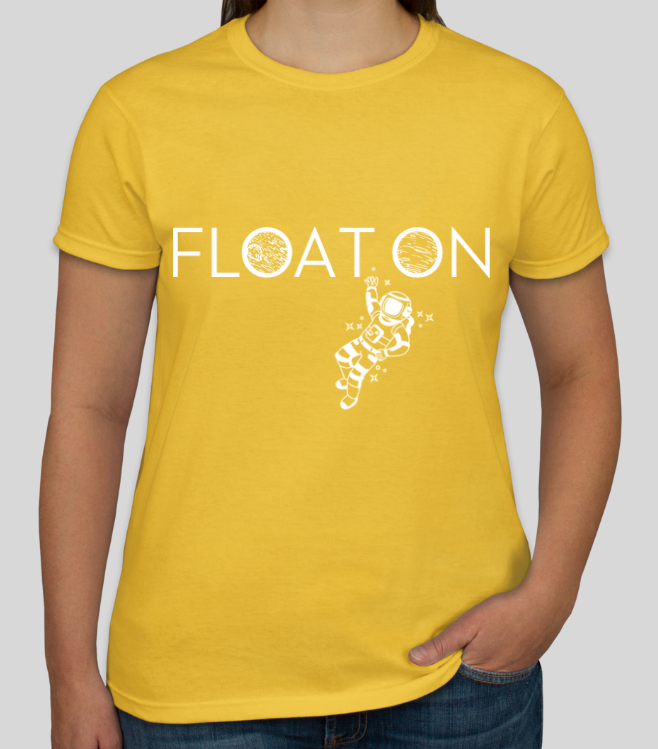
    Last month, my class was divided into groups of 3 and we were tasked with making a mock marketing campaign for a fabricated band based on our choice on three songs/genres. My group and I choose the song "Float On" my modest mouse and created the fictional upcoming band named "GLOW", for which we developed a marketing campaign based on genre research. The process of creating our marketing camping can be divided into 3 umbrella steps: genre study/ conventions, branding, and promotion development.

We separated our research into 3 categories: "INTRODUCTION TO ALTERNATIVE ROCK MUSIC", "ALTERNATIVE ROCK CONVENTIONS", and "TARGET MARKET". For our research on alternative rock we focused on researching a brief history of the genre and the overall feeling of most brands in it, this helped us gain valuable knowledge that helped us develop our brand to embrace the"cool" and often "edgy" feel of most alternative rock bands. When researching genre conventions, we focused on compiling information about how alternative rock bands' budget is managed by their labels and the distribution and promotion techniques used to increase exposure for new bands. Lastly, in order to properly define our target market [16-27] (and individuals ages 14-16 in order to introduce them to the band & the genre), we filtered interests and characteristics (which we decided upon based on our research) by an algorithm, which found about 220,000 people in the Fort-Lauderdale/Weston Florida area.

We created a promotion plan which included a "social media marketing" and "local & targeted" section ( including live events and a local launch tour). For our social media marketing strategy, we decided to open accounts on major social media platforms like Facebook, Instagram, Twitter, and Snapchat. The brand was engineered to seem “fresh” and “edgy”, baring an “effortlessly cool” look (the theme for our branding strategy). We understood how necessary it was to have a cohesive look for our brand which makes it easily identifiable on all platforms. We planned to utilize social media advertisements to target specific demographics and local communities. Locally we planned to play live events & local festivals and utilize flyers & storefronts to drive community attendance and engagement. To promote the band we created a music video (FOUND ON WEBSITE) which was an awesome experience to film! Among many other marketing products (such as merchandise), we also created a website (bit.ly/glowe-link) to market the band AND serve as a distribution enzyme.

 Crossing into distribution, we decided to use Spotify, Soundcloud, Amazon Music, Apple Music, Google Play Music, and iTunes as our preference streaming services to distribute the band's music. Having a variety of platforms on which our music can be consumed enables inclusion for the greatest possible amount of consumer demographics. Furthermore, we decided to include radio as a primary distribution method because it's still very prominent in the music industry and can serve as a great PR marketing tool locally.

This project taught me to meticulously use genre conventions research in order to make precise decisions about defining the target market, developing marketing products, and choosing distribution platforms. In addition, the project helped me always keep in mind the timeline of the project, whether it be a launch like GLOWE,  or a pre-established brand, the timeline guides a lot of important branding and promotion techniques. I'll keep this all in mind when working on my upcoming portfolio project! 
(Instagram post & Story to be used
for social media promotion, AND 
merchandise found on the website)

Thursday, December 20, 2018

I LOVE WeVideo!

Quick Post!

The video editing software I plan on using for my opening is the online editing platform, WeVideo. The platform is super convenient to access since it's online! It has everything I could possibly need, I can edit frame-by-frame, make multiple audio & visuals layers, and it even has a convenient free stock video/audio library that I can access thanks to the paid premium account my school provides for AICE Media Students! It's awesome!

Sunday, December 9, 2018

Represenatation of Imigration in the Media

I have been thinking long and hard about my project and the type of story I want to tell by means of filmmaking.

Filmmaking is about storytelling, it’s about telling meaningful stories, stories that prompt change or reflection, stories that matter. I found myself struggling to decide what to tackle for my big project, I decided I should take on something I’m passionate about, a story that matters both to me as a very amateur filmmaker and to my intended audience. I am an immigrant. Living in a third-world country gives you a very different perspective on the world, I saw first hand why people are fighting through inhuman conditions to make it to America, they’re fighting for more than stability, they’re fighting to live another day. I don’t enjoy engaging in politics, my project is not about that, it’s about showing the raw reality, no filter; I don’t see how our nationality makes us different, I see us as human and my project will strive to convey what fellow human beings are going through in search for a glimpse of hope, and with what division and hate they’re being met with.

There are two predominant ways immigrants are represented in the mainstream media. The large majority of the media, especially that which tends to lean liberal, represents immigrants as people
running away from war, poverty, and eliminate danger, in search for better lives. Although this representation is extremely close to reality, the media usually misses the heart-crushing aftermath of the journey by focusing on specific situations like the border “caravan”, undermining that immigrants all over the country who are discriminated against on a daily bases, many of which have PTSD from their journey to the United States. In addition, the media always focus their attention back into politics and government instead of keeping the story what it is, a humanitarian crisis. On the other side, the conservative media demonizes immigrants by warning the public about potential criminals infiltrated in immigrant crowds. The conservative media takes the advantage of immigrant events, like the “caravan”, to push a political agenda to tighten border security, often facts are misleading and bias.


I don’t fully agree with either representation, the liberal media and conservative media alike use immigration as a way to advance the political conversation, if successful, they quickly change their coverage to politics, forgetting the people who die daily. I must admit that liberal coverage is a fair representation of immigration; unlike conservative coverage which I find ridiculous and unfair. Although possible criminals could be found in large immigration groups, they are BY FAR a minority, being that close to 0 "terrorist" are identified as entering illegally at the border every year. This representation is unfair to immigrants who are coming to work hard and survive.

In my opinion, it’s incorrect to focus only on illegal immigrants, many legal immigrants are treated unfairly once inside the country; to change this, my project will follow the story about a legal immigrant who arrived at the border illegally, I feel this way I can cover both important aspects of immigration. I plan to retain the display of immigrants at the border (or a representation of this) in the rawest form.

I hope that through my project I will be able to showcase not politics, but humanity. I am truly in for a challenge because the project can only last 2:00 minutes, but I am optimistic that I will be able to develop the beginning of what could be an amazing story about unity.

*The theme & story orientation for my project is not final yet and may be subject to change.

Genre Study- Psychological Thrillers

Psychological Thriller film

Typical target audience of the genre
Due to the possible complexity of these films, psychological thriller films are usually targeted, across global markets, as adults in their early and mid-20s. Psychological-Horror thrillers (Cross-genre) are aimed at young adults 13-18.

Genre conventions – both within content and production techniques
Content
  • Fast Moving Plot
  • Violence is often utilized to build a tense atmosphere around the narrative
  • Possible fight & chase scenes
  • The protagonist is often immoral or an anti-hero who bears good intentions or is in danger
  • Deals with character's internal conflicts
  • Common themes include death, reality, identity, existence, purpose, crime
  • Modern films often depict an unjust society which the protagonist works against
  • Employs suspense building and diffusion techniques to keep the audience engaged
  • Utilizes irony to create suspense (By letting the audience know something that characters in the storyline do not).
  • Fast paced editing
  • Charged with symbolism
  • Utilizes non-diegetic sound (eerie music) to emphasize the building (or diffusion) of tension in scenes. May also use silence to accomplish this.
  • Thought the film may seem predictable, it’s usually the complete opposite due to heavy plot twists.
  • Films often kill off (or pretend to kill off) the main character
  • Soundtrack tempo usually begins slow and low and builds up to a higher (not always faster) pitch by the end.
  • Little to no comedic relief
  • Openly depicts weapons and blood
  • Employs low-key lighting to aid in building suspense
  • Dark color palette (especially in the protagonist’s costuming)
  • Employs focus pulls to shift attention in important scenes (Can help build irony)
  • Close-ups and extreme close-ups of protagonists are usual
  • The use of angles to show a character's dominance (or lack of) symbolically
  • Settings are usually urban and mundane
  • May leave the audience with an imminent doubt at the end
Production:
  • Average or even low filming budget. Some films may receive a bigger studio budget, but it will be far lower than action/adventure and drama/romance
  • Extremely rare to create a sequel(s) (No sequels)
  • Sets are not elaborate, as Mise-en-scène elements are meant to represent normal mundane situations, implying that the events in the film could unravel in real life.
Institutional conventions – narrative image, marketing, etc.

Narrative Image: Psychological thrillers are meant to excite the viewer via suspense; therefore, their
trailers appropriately convey the tone of the film and strive to leave the viewer with a need to see the movie in order to “connect the dots” of all the different scenes quickly flashed in the trailers. The narrative image often utilizes the same suspense techniques the film, by choosing arousing soundtracks for trailers, and low-key lighting for posters. Psychological thrillers do not usually need a sequel for further character development with similar plots (like action) and usually do not gain enough momentum for creating a spin-off to then utilize the source material to keep audiences going back. However, the studios don’t intend to build a franchise out of psychological thrillers in the first place; rather, they’re intended to be a nearly seasonal hit.

Marketing:
Studios advertise psychological thrillers by paying to air the film’s trailer. This promotion is able to reach the prime target market directly, the constant appearance if the trailer in daily programming serves as a reminder for audiences that they should watch the film. For the younger demographic of the target market, airing the trailer builds anticipation which they often share with their friends on social media or in person. While word-of-mouth is a big part of reaching the younger demographic, it truly excels in the older demographic. Adults in their late 20s are often married and working, they most likely don’t have spare time to watch TV daily; therefore, a film recommendation from a friend is highly valuable, especially if the recommender falls in the same demographic as them.

Movie theaters filter the previews they show before each movie, normally categorizing them and showing the trailers to their target markets, this helps market the film among action lovers as they are more inclined to make plans to watch the upcoming film because they are already in the  “mood” for action (Because they are about to watch a thriller).

Film samples within the genre

Film #1: The Gift
The Gift is a 2015 mystery/thriller film directed by Joel Edgerton which earned a 92% on rotten tomatoes. IMDb sums up the narrative as “A young married couple's lives are thrown into a harrowing tailspin when an acquaintance from the husband's past brings mysterious gifts and a horrifying secret to light after more than 20 years.” The film’s dark theme and plot twists are indicators that it is a psychological thriller, the narrative is twisted and the events that occur certainly have the audience at the edge of their seats. The film’s use of irony helps enhance the suspense, as the audience is aware of the disturbing facts most of the characters don’t know. Unlike other thrillers, the protagonist is not fighting against society, rather against his past, which now haunts him. The lighting shifts throughout the movie, telling audiences when suspense is approaching; the poster, copies some of the genre’s lighting techniques by having the antagonist standing in front of a completely black background, as he is lit with a dim profile light. The trailer, along with the soundtrack, started slow and built up to a fast-paced ending, just as it’s expected for the film to do so. Like many psychological thrillers, this film left the audience with a burning question about the plot, one that remains unanswered as the studio has no intention to produce a sequel.
Film #2: Psycho
Psycho is THE psychological thriller, its director, Alfred Hitchcock, is considered the father of the thriller genre and a master of suspense. The film was groundbreaking in its suspense building techniques, which have now become the norm for all psychological thrillers. Scenes such as the murder of the presumed main character halfway through the movie exemplify one of the conventions of the genre. In that scene, one can hear nondiegetic sound that helps build anticipation & suspense, and the iconic revelation of the antagonist (Norman Bates) in dramatic lighting that hides his face leaving only his outline visible to the audience. Hitchcock is the pioneer of psychological thrillers, and 1960’s Psycho is the embodiment of the genre.

Other Psychological Thriller Films:

The Begining

Hello! My name is Luis! I’m a creative extrovert that enjoys studying advanced management, business, and media. Welcome to my Media Studie...